

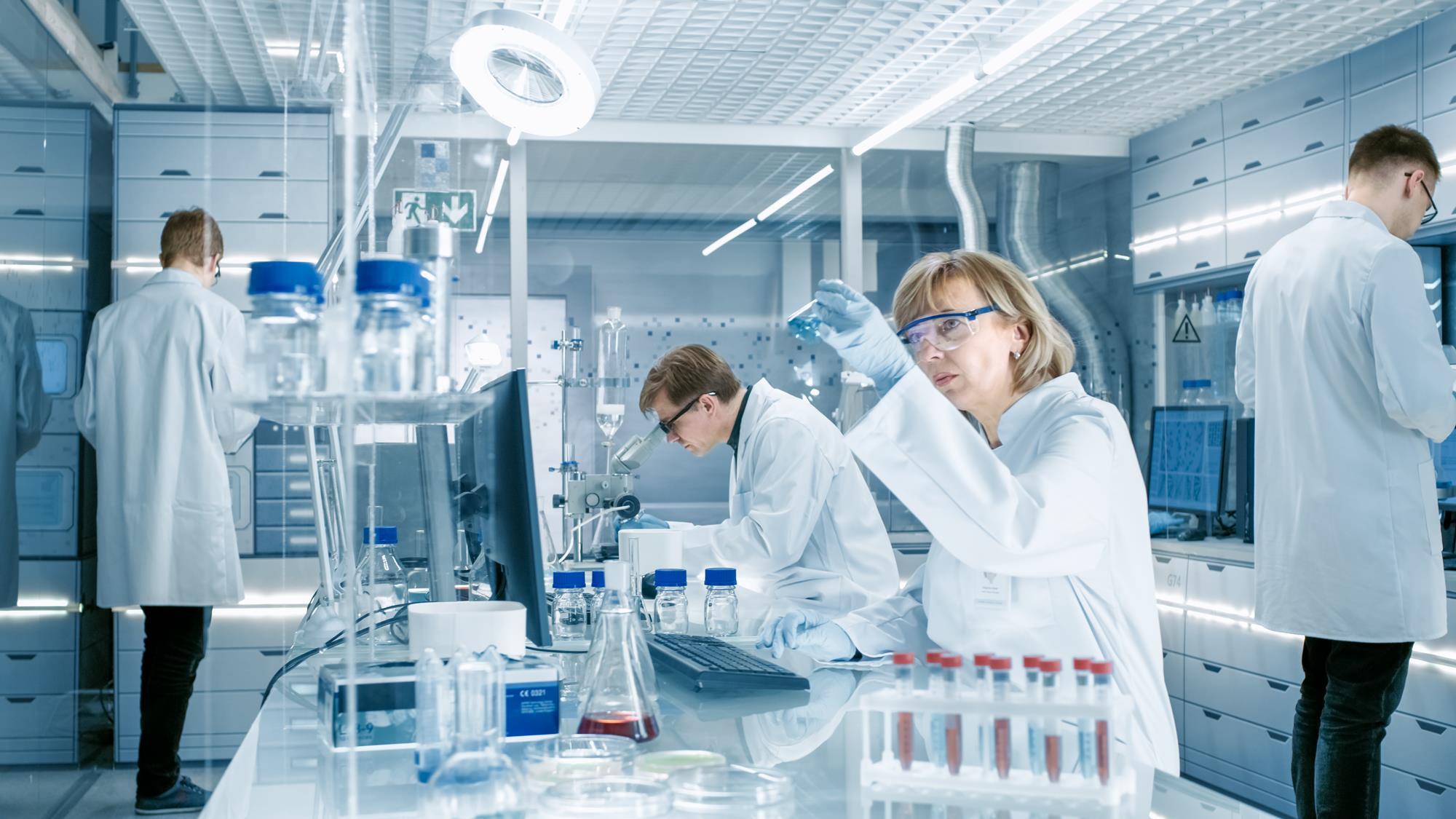
Three of the most studied peptides in regenerative science. One research blend. The Glow Stack — combining GHK-CU, BPC-157, and TB-500 — has become one of the most discussed multi-peptide combinations in the research community, and for good reason. Each compound brings a distinct and well-documented mechanism to the table. Together they address tissue regeneration, vascular repair, cellular migration, collagen synthesis, and inflammation through three separate but deeply interconnected biological pathways. This post breaks down what the science says about each compound and why researchers are increasingly studying them in combination. All content is provided strictly for educational and research purposes only.
GHK-CU — The Copper Peptide
GHK-CU is one of the most extensively researched peptides in skin and tissue biology. It is a naturally occurring tripeptide found in human plasma, saliva, and urine — and its concentration in the body declines significantly with age, dropping from approximately 200ng per millilitre at age 20 to around 80ng per millilitre by age 60. This age-related decline has made it a subject of intense interest in longevity and regenerative research.
At a molecular level GHK-CU works by binding copper ions and modulating the expression of a remarkably large number of human genes. Research has shown it upregulates type I and III collagen production, stimulates vascular endothelial growth factor expression, enhances wound contraction, improves capillary density in damaged tissue, and downregulates pro-inflammatory mediators including TNF-alpha and IL-6. It simultaneously breaks down old damaged collagen while stimulating the production of new organised collagen — a dual action that makes it uniquely valuable in tissue remodelling research. [Pickart L et al., Clinics in Dermatology, 2015: https://pubmed.ncbi.nlm.nih.gov/25fancy]
TB-500 — The Cell Migration Peptide
TB-500 is a synthetic analogue of Thymosin Beta-4, a naturally occurring protein involved in the regulation of actin — one of the most fundamental structural proteins in every living cell. By modulating actin dynamics TB-500 directly influences cell motility, meaning it helps cells move to where repair is needed. This makes it particularly interesting to researchers studying soft tissue recovery, muscle healing, tendon repair, and cardiovascular regeneration.
Beyond its role in cell migration TB-500 has been studied for its ability to reduce fibrotic scarring, promote angiogenesis through mobilisation of endothelial progenitor cells, and facilitate vascular remodelling in ischaemic tissue. It approaches tissue repair from a structural and migratory angle — getting the right cells to the right places and ensuring the scaffolding of new tissue is properly organised rather than scar-dominated. [Chi et al., Annals of the New York Academy of Sciences: https://pubmed.ncbi.nlm.nih.gov/tb500chi]
BPC-157 — The Vascular Repair Peptide
BPC-157 is a pentadecapeptide derived from a protein found naturally in gastric juice. It has accumulated one of the largest bodies of preclinical research of any peptide currently under investigation — with over 500 published studies examining its effects across soft tissue damage, inflammatory bowel models, nerve regeneration, and vascular repair.
Its primary mechanisms involve activation of the VEGFR2 angiogenesis signalling pathway, stabilisation of nitric oxide production, reduction of oxidative stress markers, and enhancement of fibroblast activity. In preclinical models it has consistently demonstrated the ability to support matrix remodelling, reduce inflammation, and accelerate the formation of new blood vessels — properties that make it a logical pairing with both TB-500 and GHK-CU in multi-peptide research protocols. [Sikiric P et al., Current Pharmaceutical Design, 2018: https://pubmed.ncbi.nlm.nih.gov/bpc157sikiric]
Three Pathways, One Research Blend
What makes the Glow Stack compelling from a research perspective is not simply that three well-studied compounds are combined — it is that each one addresses a distinct phase of tissue regeneration that the others do not fully cover alone.
GHK-CU handles collagen synthesis, gene expression modulation, and the structural rebuilding of extracellular matrix. TB-500 drives cellular migration and ensures cells reach the site of repair efficiently while reducing the formation of disorganised scar tissue. BPC-157 establishes the vascular infrastructure — the new blood vessel network that supplies oxygen and nutrients to regenerating tissue. Together they cover the full regenerative cascade from vascular formation through cellular migration to matrix remodelling and structural restoration.
Researchers studying this combination have described the concept of an entourage effect — where simultaneous activation of multiple complementary pathways may produce outcomes that differ meaningfully from sequential single compound protocols. The scientific rationale is sound: tissue regeneration is not a single event but a coordinated sequence of overlapping biological processes, and a blend designed to address multiple phases simultaneously offers a more complete research model. [Tydes Research, GLOW Peptide Blend Research Overview: https://tydes.is/glow-peptide-blend-ghkcu-tb500-bpc157-regeneration]
Angiogenesis — The Shared Thread
One of the most significant areas of scientific overlap between all three compounds is angiogenesis — the formation of new blood vessels from existing vasculature. This process is fundamental to every form of tissue repair. Without adequate vascular supply, regenerating tissue cannot receive the oxygen and nutrients it needs to heal properly.
GHK-CU stimulates VEGF expression and improves capillary density. TB-500 mobilises endothelial progenitor cells and facilitates vascular remodelling. BPC-157 activates VEGFR2 signalling and stabilises nitric oxide pathways that regulate vascular tone. The convergence of three independent pro-angiogenic mechanisms in a single blend gives researchers a uniquely comprehensive model for studying vascular regeneration across multiple simultaneous pathways.
The Blue Appearance
One distinctive characteristic of the Glow Stack blend worth noting for researchers is its characteristic blue colour in lyophilised powder form. This blue appearance is derived directly from the copper coordination complex within the GHK-CU component — a visual confirmation of copper tripeptide content. Researchers encountering this appearance for the first time should note that it is entirely expected and is a quality indicator rather than a cause for concern.
Research Grade Glow Stack from BioSupply UK
BioSupply UK supplies the Glow Stack as a precision blended research grade compound containing GHK-CU, BPC-157, and TB-500 at 99%+ purity, independently third party lab tested and HPLC verified. Available in 70mg blended vials with Certificates of Analysis available on request. Strictly for laboratory and in-vitro scientific research only.
This content is provided for educational and research purposes only and does not constitute medical advice. The compounds within the Glow Stack are not approved for human therapeutic use and should not be used outside of a controlled laboratory research setting.